01/22/10

The Intelligent Booth at IBS

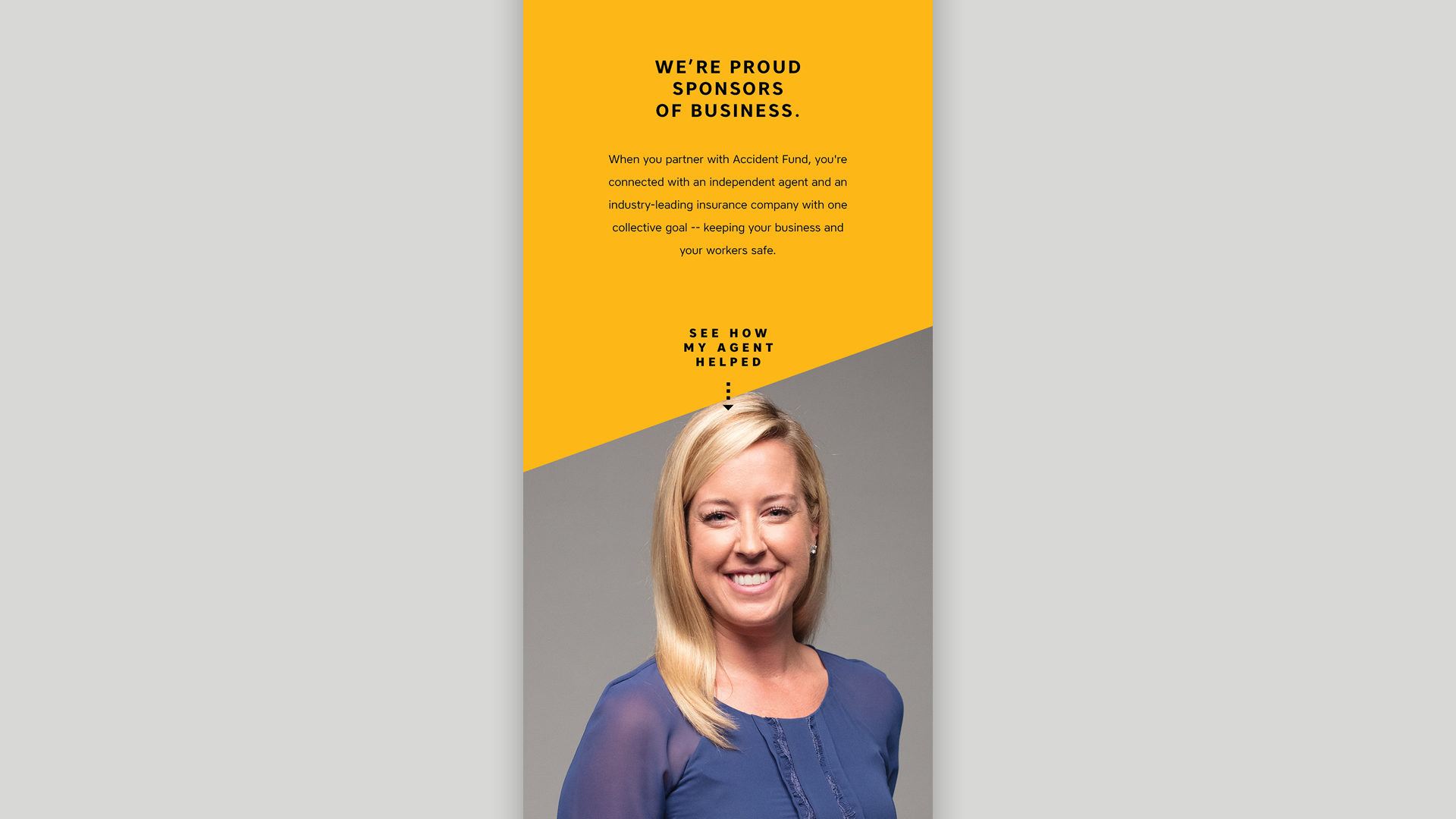
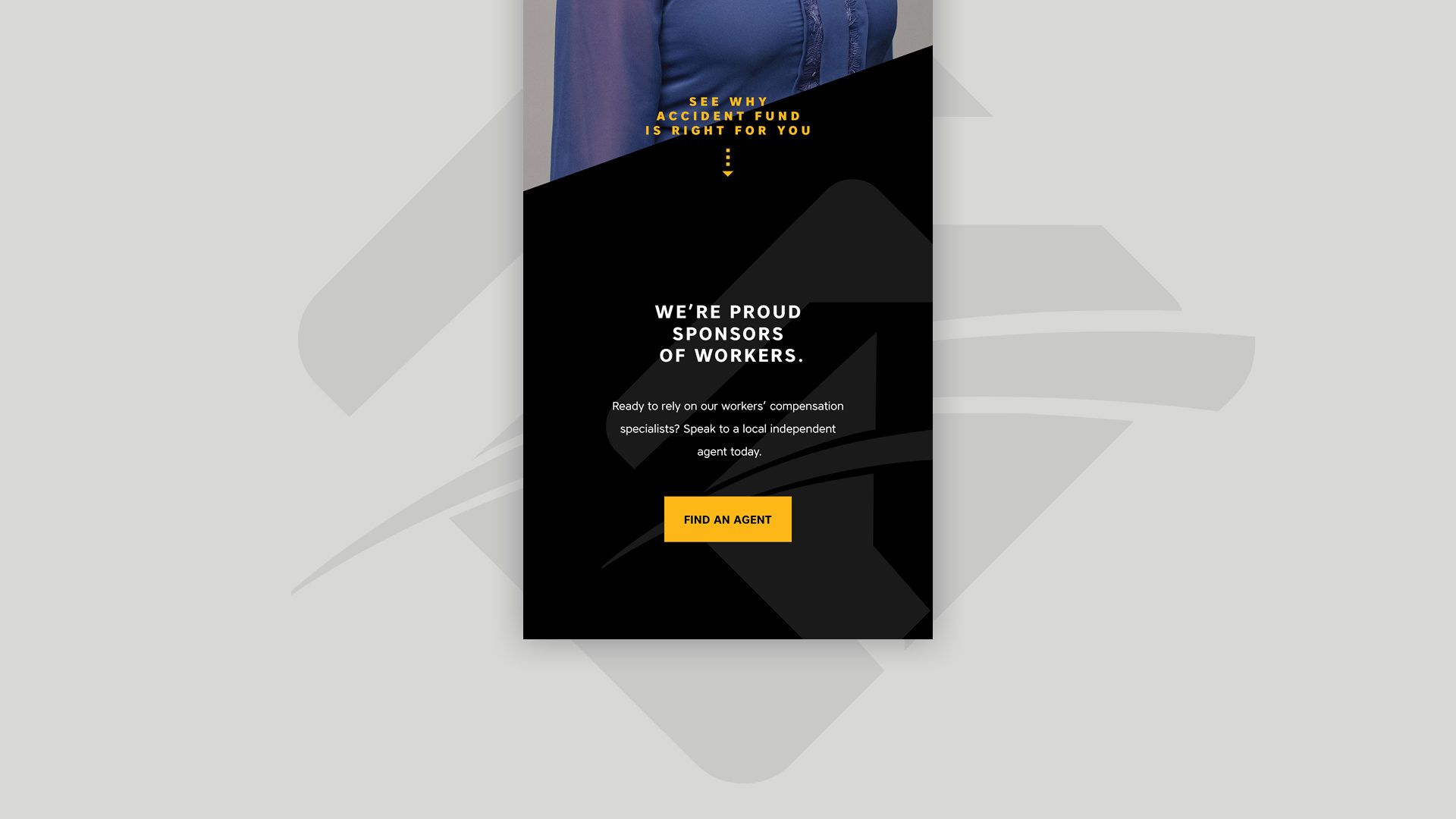
At this year's International Builder Show, we helped three brands of the Masco Builder Cabinet Group make a big splash with a clean, interactive, powerful experience that was true to their exciting new offerings. With touch screens everywhere, evolved and cohesive brand messaging throughout, we led the look, feel, messaging, and many of the technical elements within the show. It also included live Social Media, Polls, and analytics throughout. We led collaboration with 3 other agencies and several vendors. The result was one their most successful shows ever - with a dramatic improvement over last year's leads and overall attention.


B-to-B, B-to-C, Design, Interactive, New Work, Sharing

08/24/09

Newspapers, advertising.

It's no secret that newspapers are having a tough time. But smaller, more focused local papers are finding that their readership loyalty is stronger than ever.

We helped Booth Mid-Michigan create an outdoor campaign for each of their cities: Flint, Bay City, and Saginaw. These will help assuage fears and rumors in the community that the papers are disappearing. In fact, they are becoming stronger than ever.


Advertising, B-to-B, B-to-C, New Work, Sharing

08/13/09

The answer is simple.

Nearly every situation and organization we walk into shares a common theme: communications have become more complex, more layered, and the sales process has gotten murky and difficult to manage. The common problem? The company is way too close to the products and services, and the day-to-day operation and politics. More often than not, we are there to simplify.

Easier said than done? Absolutely. Stakeholders talk about the reasons why they cannot change using similar language and patterns. Generally, it is people who are so passionate about their one piece of the pie that they fail to see the other pieces and their own individual passions. Our biggest early challenge is getting people to see the big picture and understand the greater purpose of the organization.

First, we strip away the years of cobwebs: the politics, the outdated reasoning, turn over of people – all the things that lead to an inward-looking organization. Then we talk with customers: the current ones, some prospects, and a few that left. We find out the true pain points vs. the ones that seem to be prevalent from the inside looking out.

A common thing that we find is that the company is no longer capable of seeing past the day-to-day tasks. Even mission and vision sessions have diminishing returns almost immediately because of their lack of implementation and tangible results. Unless the outside world sees your reason for being, it really doesn’t matter at all.

Too many companies also just go through a cosmetic rebrand. That is, they paint over the cracked paint and think they have made a difference. A true rebrand goes deep: scrapes the old paint off, sands thoroughly, cleans up, and then starts to repaint once again

It takes a lot more work, but the result is always cleaner, simpler, more evident to the outside world, and far more sustainable. And it begins to pay dividends right away.
 

B-to-B, B-to-C, Design, Opinion, Sharing

08/4/09

Stop marketing. Start “marking”.

In the traditional world, marketing has been all about push. Just send out as many things to an audience as possible and hit them until they start paying attention. But people have changed. Now, it’s about creating a brand that makes a mark in someone’s mind so that a customer is drawn to you. You must create a gravitational pull toward your brand – and leaving a solid mark in a potential customer’s mind is the only way to do it.

How can this be accomplished? It’s a change of mindset. You must think of your brand as a living entity, capable of conversation and engagement instead of just standing on a soapbox and yelling. It must have the ability to respond, react, answer, and build a relationship.

Where do you begin? Make certain you have something important to say. This happens just like any other conversation you have in life – you’d better understand your audience inside and out. Don’t assume they just care about “value” or “quality”. Maybe they care more about intelligence and consistency. Once you begin the conversation, you need to give people a place to respond and engage. This type of communication will help imprint you in their minds, building trust, and gaining entry into your psyche in powerful ways. Once you have this trust with customers, the sale has already been made, and you only have to be available instead of needing to inundate.

We call it marking. Which is much more complex and nuanced than marketing.

In many ways it’s much more complicated to execute. But once it’s underway, it feels far more natural and empowering to both you and your prospects.


B-to-B, B-to-C, Opinion, Sharing

05/28/09

11 thoughts for 11 years.

As I celebrate 11 years of being in business, I look back on some of the things I’ve learned.


  1. We get better every day. Back in 1998, I thought I knew everything there was to know about advertising. All I really knew was how to win awards. That is not the same thing as helping our clients prosper by any stretch. Every day, I learn something that we can apply across our client spectrum to improve their business.
  2. The client knows more than we do. We used to walk into a room and try to out-passion people about their own businesses. This is not our job. Our job is to take their passion, help take it to the next level, and help it spread in the marketplace.
  3. Technology should be wrapped around fundamentals. I’ve seen web firms come and go. I’ve seen online ad agencies come and go. I’ve seen SEO companies come and go. Hell, I even recall a couple of Second Life agencies. Technology has grown so much in the last 11 years, and even in the last 11 minutes. But technology is a means to deliver proven marketing fundamentals. It is not a fundamental on its own.
  4. The good days are good. Getting new business. Launching a campaign after months of work. Presenting a client with a plan and a vision and a brand that gets them re-excited about why they come to work every day. Those are good days, and they make it well worth it. Heck, they even make up for the….
  5. The bad days are really bad. Getting a budget cut. Not getting paid for our work. Winning a pitch and then finding out it wasn’t funded. Losing business for all the wrong reasons. Internal issues. These are the bad days. And they can really wear on you in this business.
  6. We get to meet some of the coolest people on the planet. Celebrities. Industry movers and shakers. People with little more than an incredible idea. Their stories are so different, but remarkably inspiring. There is no other business I can think of that allows such access to unique stories, goals, visions, and dreams within deep, meaningful relationships.
  7. You’ve got to have fun. As a small office, we tend to drive each other insane. So we have office games (including this one called Mickless that is so perfect, I believe I could sell the concept). We joke. We rib. And we get an incredible amount of good work done on behalf of dozens of clients.
  8. Take a long view of successes. When I think of client engagements, 11 years gives you the ability to see not only what worked immediately, but also what is sustainable from a marketing perspective. Every agency shows you their success stories. I’m not afraid to show failures as well. After all, are you going to trust someone who claims to have never failed? How then, have they ever learned to succeed?
  9. Times will always be tough. The last 11 years in the State of Michigan have been challenging. It’s also easy to blame things on the external. I’ve seen the dot com boom and bust, I’ve seen 9/11 and the aftermath, I’ve seen a state where the economy has been in recession for 8 years. But I’ve seen successes throughout, almost always by those who refuse to see the outside situation as a hindrance on their own situation.
  10. Share more. I used to be afraid of letting go. Letting go of industry secrets. Of the special sauce. Of our client list. Of relationships with other partners. It took me a while to see the light, but the more you give, the more you get back. So now I share freely, ask frequently, and open my business to anyone who wants to look. If you can replicate it, go for it. But you can’t.
  11. Eleven things on a list? Unnecessary. Brevity is still king. If you can’t sum up things quickly, you’re doing it wrong. This blog post has gone on way too long, and if I’m being honest, there was diminishing returns after about 4.

B-to-B, B-to-C, Community, Design, Opinion, Sharing

05/19/09

Inspiring Change: Creating a Movement v Cutting Down a Tree

I read a book recently called the Golden Spruce about a disgruntled outdoorsman and former logger turned quasi environmentalist who cut down a 300+ year old tree to make a point about deforestation. His goal was to bring attention to the deforestation of the Pacific Northwest and inspire people to put an end to a particularly hideous form of “strip logging.” The tree was an important fixture in the local indigenous culture, and was known around the world for its incredible and unique beauty. The story ended horribly with the “environmentalist” dying on the lamb and the indigenous people feeling more isolated and alienated from their dying culture. The deforestation of the Pacific rainforest continues. His heart may have been in the right place, but his tactics were clearly misguided.

This got me thinking about efforts we have been involved with, in which we have tried to affect behavioral change. We have had the most success when we have spurred the development of a movement, and empowered individuals to contribute/act in a positive manner. We have found that hope and positive change are much better motivators than fear and destruction. This is illustrated by work that I have done with Energy Star, as well as our University of Michigan Planet Blue initiative (case study available from our website). In both cases, we used themes of empowerment and inspiration to compel individuals to get involved and be a part of a broader movement. The Energy Star Change a Light, Change the World campaign has achieved great success by giving individuals relatively small, simple tasks (change a light bulb, etc.) which are tied to a greater good. The same can be said with Planet Blue, in which we have motivated individuals throughout the University with small tasks to reduce energy usage (turning down the thermostat, turning off lights, etc.). We have created a community in which people can witness the involvement and success of their peers, and have spurred a friendly competition to perform energy savings acts.

Contrast that with efforts that have taken a more negative tone, focusing on destruction and fear as motivating factors. For years, Greenpeace has tried to use images of dying baby seals and fear to drive environmental awareness. While they have certainly achieved a good amount of notoriety, it can be safely stated that they have alienated and turned off as many people as they have inspired. The same may be said of PETA and their negative efforts (blood on fur coats, etc.). We may even draw parallels from the recent presidential campaign, with one candidate focusing on hope and change, while the other used mostly negative attacks.

The rise of social networking may have a lot to do with the success of more positive/change driven initiatives. It is now possible to communicate, inspire and motivate individuals in a much more immediate and task driven manner. Social networking is a huge component of the Planet Blue efforts, and has been given much credit for Obama’s victory.

However, I hope the success of the positive/inspiring efforts speak more to our human spirit, and our ability to inspire and act collectively towards a common goal.


(Mike Rouech)

B-to-B, B-to-C, Opinion, Sharing

05/11/09

A Daly thought.

I grew up a fervent Pistons fan. They won their first championship my senior year in high school after some devastating playoff defeats (Bird steals the ball, etc.) in previous years. Their success was inspiring, because they were simply different than the rest of the league in every way. Even though they were from all parts of the country, they were all Detroit personified. Tough. Intimidating. Hard working. Results-driven. And resilient. They climbed the ladder one step at a time – no shortcuts.

Chuck Daly was the unlikely leader of the group. He was slick. Charismatic. Well-dressed. And smiled more than any NBA coach before or since. He was a special guy who was able to subtly bring out the best in everyone, while keeping egos carefully in check. When he passed away over the weekend, we wanted to do something to quickly commemorate it.

This billboard is now appearing on at least two of the electronic boards in the Detroit Metro area. Amazing what can be done in a moment’s notice.


Advertising, Community, New Work, Sharing

04/19/09

Facebook is a tool, not a plan.

OK. Let’s have a frank one-sided conversation. Social media is powerful. Undeniable. But game changing? Not so fast. While it is true that it is an inexpensive (free) way to reach and stay in contact with potential customers, it is not some kind of silver bullet that will destroy all learned and proven notions of how marketing is done. It is a tool that can work in line with proven strategies, but it is not a strategy in and of itself.

We’re steering our customers (where appropriate) into it in an easy-to-manage way. But like everything else, it has to reach your audience, it has to reinforce your position, and it must forward the ball in terms of the brand-customer spectrum.

In short: social marketing: a powerful tool, not a panacea. It is the new, bright, shiny object that everyone loves, but no one has proven it to be effective completely on its own. We’re looking for the case study that proves us wrong, but so far, it has only been successful in a certain demographic in concert with several other elements.

OK. That’s it. Now if you’d like to follow us on Facebook, click here. If you’d like to follow us on Twitter, click here. But if you’d like to engage with us, let’s do so in person, over a serious, one-on-one conversation. That is the connection that matters most.

Advertising, B-to-B, B-to-C, Community, Interactive, Opinion, Sharing

03/17/09

Experiential Design: a more intelligent approach to the web.

Soon, we’ll be launching a few websites that include a new design philosophy. Whereas before, you’d come to the homepage and navigate to your area of interest, we’re turning that experience on its head. Now, you will come to a website, create preferences, and the website will become relevant to only your needs and wants. In other words, instead of navigating a website to find the pertinent information, the website will navigate itself to filter information that the user requires.

In addition, a website can literally learn preferences and change on the fly. Now you can have a diverse business and appear specialized, and simplify the user experience based on their needs. All the while, you can get a clearer understanding of the desires of visitors to help hone the rest of the communications plan.
 
We’re calling it Experiential Design. And it has the ability to create Web 2.0 technology into every business. And it’s extremely cool. Stay tuned.
 

B-to-B, B-to-C, Community, Design, Interactive, Opinion, Sharing